
Yes, a tooth infection can exist without noticeable pain.
Some infections cause a toothache, while others are discovered during an examination or through dental imaging. A tooth that once hurt may also become more comfortable even though the underlying problem remains.
Pain alone cannot establish whether a tooth is healthy or whether an infection needs treatment. At Creve Coeur Family & Sedation Dentistry, we combine examination findings, your history, and appropriate tests to understand what is happening and explain your options.
How Soon Should You Seek Care?
The next step depends on your symptoms and overall condition.
Seek emergency care immediately if you have difficulty breathing or swallowing. Call 911 or go to the nearest emergency department. Do not wait for a dental appointment or an office callback.
Rapidly increasing mouth or neck swelling, or swelling affecting an eye, also requires immediate medical assessment.
Seek urgent dental assessment for facial swelling, fever, or feeling unwell with a possible dental infection. If you have fever with facial swelling and cannot reach a dentist, go to an emergency department.
For a recurring gum bump, drainage, discoloration, or localized swelling without those emergency symptoms, contact a dentist promptly and describe the changes. Feeling comfortable does not establish that waiting is safe.
Our emergency dentistry team can assess urgent dental concerns and explain the appropriate next steps.
Why Might an Infected Tooth Not Hurt?
Dental infections can affect the pulp inside the tooth, tissues around the root, or the supporting gums. Symptoms vary with the location and condition involved.
Changes in the Pulp
The pulp is soft tissue containing nerves and blood vessels. Deep decay, cracks, or injuries can allow bacteria to enter the tooth.
Inflamed pulp may initially cause sensitivity or a toothache. If that tissue dies, the tooth may stop responding normally to temperature. Pain may decrease even though infection remains.
However, tissues around the root can still become painful. A tooth with dead pulp is not necessarily painless, and a toothache that stops should not automatically be considered resolved.
Drainage That Reduces Pressure
An infection may develop a drainage pathway through the gum. This can appear as a small pimple or recurring bump near the tooth.
Drainage may relieve pressure and discomfort while leaving the source untreated. The bump can disappear and return.
A bad taste or fluid draining near a tooth is worth reporting even if you do not have a toothache. Do not squeeze or try to drain a gum bump yourself.
Few Noticeable Symptoms
Some infections develop with little obvious discomfort. Mild pressure, occasional tenderness, or a gradual color change may be easy to overlook.
Others are detected when a dentist investigates decay, an old restoration, or an unexpected imaging finding. This is one reason dental exams and cleanings remain useful when nothing hurts.
What Other Changes Should You Notice?
Possible signs of a dental problem include:
- A recurring gum bump or localized swelling.
- Drainage or an unusual taste.
- A tooth becoming darker.
- Tenderness when biting or chewing.
- Pressure around a tooth.
- Unexplained tooth looseness.
- A cracked tooth or damaged restoration.
These findings do not confirm infection. For example, discoloration can have several causes, and gum swelling may come from a problem in the supporting tissues rather than inside the tooth.
Persistent bad breath also has many possible explanations. Describe what you have noticed without trying to diagnose the cause at home.
Tell the dental team when the change began, whether it comes and goes, and whether the tooth has previously hurt or received treatment.
How Does a Dentist Diagnose a Painless Infection?
An evaluation brings together several pieces of information.
The dentist asks about previous pain, trauma, dental work, swelling, and drainage. An older injury may still be relevant, so mention it even if the tooth has felt comfortable for years.
The examination checks the tooth, existing restorations, nearby gums, and supporting tissues. Depending on the findings, testing may include temperature response, gentle tapping, biting pressure, or measurements around the gums.
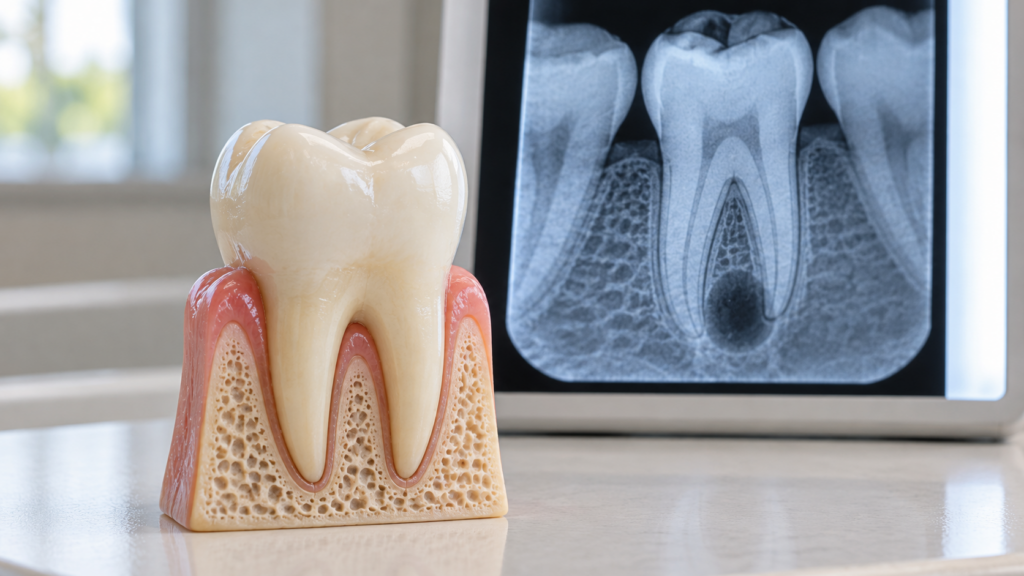
Dental X-rays may help identify deep decay or changes around a root. Additional imaging is considered only when clinically appropriate.
No single symptom, test, or X-ray finding provides the whole diagnosis. Some imaging changes need comparison with older records or further assessment before treatment is recommended.
Bring relevant dental records if requested, and share your health conditions and medications. Your overall health can affect the urgency and planning of care.
Ask the dentist to show you the findings and explain how they fit together. You can ask whether a concern is confirmed or still being investigated, how soon it needs attention, and what the recommended next step involves. Clear explanations can help you understand the plan without relying on pain as a guide.
How Is a Tooth Infection Treated?
Treatment depends on the source, the tissues involved, and whether the tooth can be retained.
Root Canal Treatment
If the infection originates inside a tooth that can be restored, root canal therapy may be recommended.
The clinician removes infected or damaged pulp tissue and cleans, shapes, and seals the canals. A restoration is then planned according to the tooth’s condition and location.
Some cases require evaluation or treatment by an endodontist. The recommendation depends on the findings and complexity of the case.
Extraction or Periodontal Care
If a tooth cannot be appropriately restored, tooth extraction may be discussed. Infection alone does not automatically mean the tooth must be removed.
An abscess involving the gums and supporting tissues may instead require drainage, periodontal cleaning, or other care directed at that source.
The dentist should explain where the problem began and why the recommended treatment addresses it.
Antibiotics When Indicated
Antibiotics do not replace treatment of the dental source. They may be prescribed when clinically appropriate, including certain cases involving spreading infection or systemic symptoms.
Definitive care may still require drainage, root canal treatment, extraction, or periodontal treatment. The choice depends on the diagnosis and your health.
Do not use leftover antibiotics or someone else’s prescription. If medication is prescribed, follow the clinician’s instructions and report worsening symptoms promptly.
What if Dental Anxiety Makes Scheduling Difficult?
Tell us about your concerns when you contact the office. Our approach to patient comfort and individualized care includes listening, explaining findings, and discussing suitable support. We will identify any concerns that need prompt treatment.
Comfort options include nitrous oxide, oral conscious sedation, IV sedation, and in-office general anesthesia when indicated. Suitability depends on your health, medications, treatment needs, and other clinical factors. Sedation is not appropriate for every patient and does not treat the infection itself.
Can You Wait Until the Tooth Starts Hurting?
Waiting for pain is not a reliable way to judge a possible infection.
Symptoms may change as pressure, drainage, or inflammation changes. A comfortable tooth can still need treatment, while an unusual X-ray finding may need further investigation before a diagnosis is established.
Contact the office about new changes between routine visits. If a dentist recommends monitoring an uncertain finding, ask what follow-up is needed and which symptoms should prompt an earlier call.
Professional monitoring involves a plan. It is different from indefinitely watching a suspicious tooth or gum bump at home.
Frequently Asked Questions
Can a dental abscess really be painless?
Yes. Infection around a tooth root may cause little or no pain. Drainage can also reduce discomfort without removing the source. A recurring gum bump or suspicious finding needs professional evaluation.
Can a tooth infection go away on its own?
Do not assume it has resolved because symptoms improve. A dental abscess needs treatment, and an untreated source can remain even after swelling or discomfort decreases.
If my toothache stopped, is the infection gone?
Not necessarily. Pain can change because of drainage or changes in the pulp. Contact a dentist about a previous significant toothache, especially if you also notice swelling, drainage, or discoloration.
Will antibiotics cure a tooth infection?
Antibiotics may be used when indicated, but they do not replace treatment of the source. Your dentist determines whether drainage, root canal treatment, extraction, periodontal care, or another approach is needed.
How long can an infection remain painless?
There is no reliable timeline for an individual tooth. Symptoms cannot predict when a condition will worsen. Seek evaluation rather than waiting for a toothache to establish urgency.
Get Clear Answers About a Possible Infection
An examination can help explain an unusual gum bump, color change, drainage, or other concern, even when the tooth feels comfortable.
At Creve Coeur Family & Sedation Dentistry in Creve Coeur, MO, we explain findings, discuss appropriate treatment, and consider your comfort needs.
Schedule a Dental Evaluation to discuss a possible problem. For difficulty breathing or swallowing, seek emergency medical care immediately.