
Losing a tooth can affect much more than your smile. A missing tooth may make it harder to chew comfortably, speak clearly, and maintain proper alignment of your remaining teeth. Fortunately, modern restorative dentistry offers several options for replacing missing teeth, including dental bridges.
A dental bridge has been used for many years to restore both the appearance and function of a smile. But how do you know if it’s the right solution for your situation?
At Creve Coeur Family & Sedation Dentistry, we believe every treatment recommendation should be based on your unique oral health, goals, and lifestyle. Here’s what you should know about when a dental bridge may be recommended.
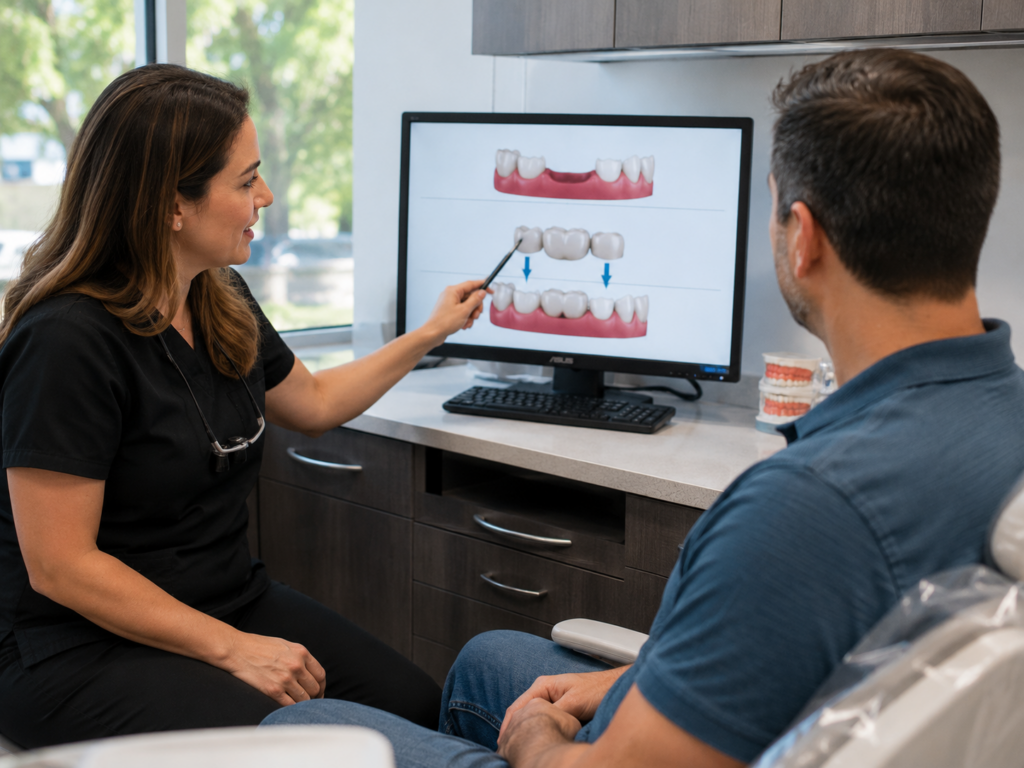
What Is a Dental Bridge?
A dental bridge is a custom-made restoration designed to replace one or more missing teeth. It “bridges” the gap left behind by a missing tooth by anchoring an artificial tooth (or teeth) to the healthy teeth on either side of the space.
Depending on your individual needs, a dental bridge may be supported by natural teeth with dental crowns or, in some cases, by dental implants.
Your dentist will evaluate your oral health to determine whether a bridge is an appropriate option or whether another type of restoration may better meet your needs.
When Is a Dental Bridge Typically Recommended?
A dental bridge may be recommended when you have one or more missing teeth and the neighboring teeth are healthy enough to support the restoration.
Some common situations include:
- A tooth has been lost due to decay or injury.
- A tooth needed to be extracted because it could not be restored.
- You want a fixed replacement rather than a removable appliance.
- The surrounding teeth already require crowns, making a bridge an efficient restorative solution.
- You are looking for a treatment that restores both appearance and chewing function.
Every smile is different, so your dentist will carefully evaluate your teeth, gums, bite, and overall oral health before recommending a treatment.
Why Is It Important to Replace a Missing Tooth?
Some people assume that a missing tooth is only a cosmetic concern. However, leaving a gap untreated can eventually affect your oral health.
Replacing a missing tooth may help:
- Maintain proper spacing between teeth
- Support comfortable chewing
- Improve speech in some cases
- Preserve your bite alignment
- Restore confidence in your smile
While every situation is unique, replacing missing teeth promptly can often help prevent additional dental concerns from developing over time.
How Does a Dental Bridge Compare to a Dental Implant?
Dental bridges and dental implants are both excellent options for replacing missing teeth, but neither is automatically the best choice for every patient.
A dental bridge may be recommended when:
- The neighboring teeth would already benefit from crowns
- A patient prefers a fixed restoration without removable appliances
- Certain health, anatomical, or financial considerations make another option more appropriate
- Individual treatment goals support a bridge as the preferred solution
A dental implant may be recommended in other situations, particularly when replacing a single missing tooth without involving adjacent teeth.
During your consultation, your dentist will explain the advantages and considerations of each option so you can make an informed decision together.
What Is the Process for Getting a Dental Bridge?
Receiving a dental bridge generally involves several steps.
First, your dentist performs a comprehensive examination to evaluate your oral health and determine whether a bridge is appropriate.
If a bridge is recommended, the supporting teeth are carefully prepared, impressions or digital scans are taken, and a custom restoration is fabricated to fit your smile.
Once your permanent bridge is ready, it is securely placed, adjusted for comfort, and checked to ensure your bite functions properly.
Throughout the process, your dental team focuses on creating a restoration that feels comfortable and looks natural.
Can a Dental Bridge Last for Many Years?
With proper care, many dental bridges provide years of reliable function.
The longevity of a bridge depends on several factors, including:
- Daily brushing and flossing habits
- Routine professional dental cleanings
- Overall oral health
- Bite forces
- The condition of the supporting teeth
Regular dental exams allow your dentist to monitor the bridge and identify any concerns before they become larger problems.
Is a Dental Bridge the Right Choice for Everyone?
Not necessarily.
Although bridges are an excellent solution for many patients, they are not appropriate in every situation.
Your dentist will consider several factors, including:
- The number of missing teeth
- The health of neighboring teeth
- Bone and gum health
- Existing restorations
- Overall oral health
- Long-term treatment goals
In some cases, dental implants, dentures, or another restorative treatment may better meet your needs.
Because every smile is unique, personalized treatment planning is always the most important step.
What If I’m Nervous About Dental Treatment?
Some patients delay replacing missing teeth because they feel anxious about visiting the dentist.
When clinically appropriate following an individualized evaluation, sedation options such as nitrous oxide, oral conscious sedation, IV sedation, or in-office general anesthesia may be discussed to help patients receive the care they need comfortably. These options are recommended only when appropriate for the patient’s specific treatment and medical history.
Restore Your Smile with Personalized Care
Replacing a missing tooth is about more than improving appearance; it’s about protecting your long-term oral health, restoring comfortable function, and helping you smile with confidence.
At Creve Coeur Family & Sedation Dentistry, we’ll perform a comprehensive evaluation, discuss all appropriate treatment options, and recommend the solution that best fits your needs and goals. If you’re wondering whether a dental bridge is right for you, contact Creve Coeur Family & Sedation Dentistry to schedule a consultation. We’re here to help you restore your smile with compassionate, personalized care.
Frequently Asked Questions
What is a dental bridge used for?
A dental bridge is used to replace one or more missing teeth. It helps restore your smile, improve chewing function, support clear speech, and prevent neighboring teeth from shifting into the empty space.
How do I know if I’m a good candidate for a dental bridge?
A dental bridge may be recommended if you have one or more missing teeth and the surrounding teeth are healthy enough to support the restoration. Your dentist will evaluate your oral health, bite, and treatment goals to determine whether a bridge or another tooth replacement option is best for you.
Is a dental bridge better than a dental implant?
Neither option is universally better. A dental bridge and a dental implant each have advantages depending on your oral health, the condition of neighboring teeth, bone support, and your overall treatment goals. Your dentist will explain the most appropriate options during your consultation.
How long does a dental bridge last?
A dental bridge can provide many years of reliable function with proper care. Brushing, flossing, routine dental exams and cleanings, and maintaining good oral health all help support the longevity of your restoration.
Can patients with dental anxiety receive a dental bridge?
Yes. If dental anxiety has prevented you from replacing a missing tooth, talk with your dentist about your concerns. Following an individualized evaluation, sedation options such as nitrous oxide, oral conscious sedation, IV sedation, or in-office general anesthesia may be discussed when clinically appropriate to help make treatment more comfortable.